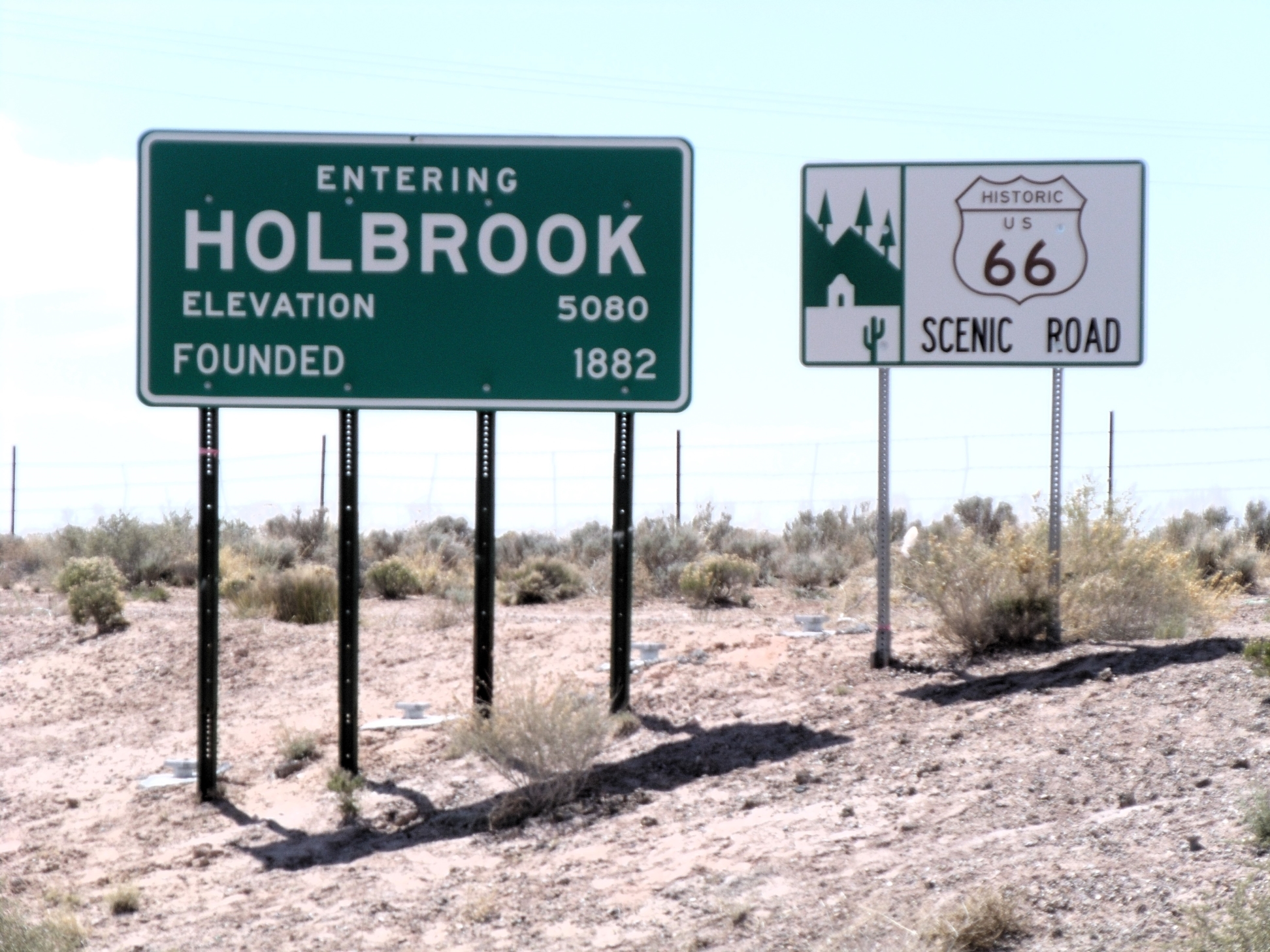
The road begins long before you reach it.
Long before the cracked asphalt, the leaning telephone poles, the neon signs buzzing back to life at dusk. Long before the burros of Oatman wander into the street or the wind sweeps across the Painted Desert. Route 66 begins in the imagination — in the idea that somewhere out there, a road can take you not just across a continent, but into a different version of yourself.
For nearly a century, the Mother Road has been more than a highway. It has been a promise.
When it opened in 1926, Route 66 stitched together eight states and thousands of small towns, creating a ribbon of opportunity across the American West. Farmers fleeing the Dust Bowl followed it toward hope. Soldiers returning from war drove it toward new beginnings. Families in chrome‑trimmed station wagons cruised it toward vacations, motels, and the glowing promise of the open road.
And then, almost as quickly as it rose, it began to disappear.
The Interstate Highway System bypassed town after town, leaving diners empty, neon signs dark, and motel doors locked. By 1985, Route 66 was officially decommissioned — erased from the map but not from memory.
What survived was something stranger and more powerful than a highway. It became a legend.
Nowhere is that legend more alive than in Arizona.
Arizona holds the longest surviving stretch of the original road — 385 miles of desert, forest, mountain, and myth. Here, the past is not a museum exhibit but a living presence. Burros wander the streets of Oatman as if the miners never left. Angel Delgadillo still greets travelers in Seligman, the barber who refused to let the road die. In Winslow, a single lyric from an Eagles song revived an entire downtown. In Two Guns, the ruins whisper stories — some true, some invented, all part of the strange alchemy of Route 66.
This book is a journey through that landscape: part history, part travel guide, part storytelling companion. You’ll meet the people who built the road, the migrants who traveled it, the entrepreneurs who mythologized it, and the preservationists who saved it. You’ll explore ghost towns, neon-lit diners, volcanic craters, and desert horizons that seem to stretch into forever.
Most of all, you’ll discover why Route 66 still matters.
Because the Mother Road is not just a relic of the past. It is a mirror held up to America — reflecting our migrations, our dreams, our failures, our reinventions. It is a reminder that even when a road is forgotten, it can be rediscovered. Even when a town is bypassed, it can be reborn. Even when a story fades, someone can bring it back to life.
And so we begin.

Route 66 Was
• Length & Path: 2,448 miles (3,940 km), crossing 8 states: Illinois, Missouri, Kansas, Oklahoma, Texas, New Mexico, Arizona, and California.
• Purpose: Built to connect rural towns to major cities, it was one of the first highways in the U.S. Numbered Highway System.
• Nicknames: Known as the Mother Road (coined by John Steinbeck in The Grapes of Wrath), Main Street of America, and Will Rogers Highway.
Historical Significance
• 1926–1938: Route 66 was approved in 1926 and fully paved by 1938.
• 1930s Dust Bowl Migration: Thousands of families fleeing drought and poverty in the Midwest traveled west on Route 66 toward California, making it a road of hope.
• Economic Lifeline: The highway supported motels, diners, gas stations, and roadside attractions, fueling local economies.
• Cultural Icon: Popularized by the 1946 song “(Get Your Kicks on) Route 66”, the 1960s TV show Route 66, and later films like Pixar’s Cars.
Decline & Preservation
• Interstate Highway Act (1956): President Eisenhower’s push for modern interstates led to Route 66 being bypassed.
• Decommissioned (1985): Officially removed from the U.S. Highway System.
• Historic Route 66: Portions in six states have been preserved as a National Scenic Byway, and many towns celebrate Route 66 heritage with museums, festivals, and restored landmarks.
Why It Still Matters
• Symbol of Freedom: Represents the American love of road trips and exploration.
• Tourism: Today, travelers retrace Route 66 to experience vintage motels, neon signs, quirky roadside attractions, and desert landscapes.
• Cultural Legacy: It embodies resilience, migration, and the blending of local cultures along its path.
A Century of Road Trips on Route 66: Stories Guides Folklore and History
Donate towards future projects ⤵
https://pay.ride2.life/support2026RIDE2life
Processor for electronic transactions is GoDaddy for us.

🙏🙏